More Than Coffee: Inside Mores, the Neighborhood Café That Became a Community
Mores Coffee opened three years ago with no investors, no branding agency, and no launch event. Just a room, a counter, and a founder who wanted to build the kind of café his neighborhood didn't have yet. Three years later, it's exactly that — and nothing more.

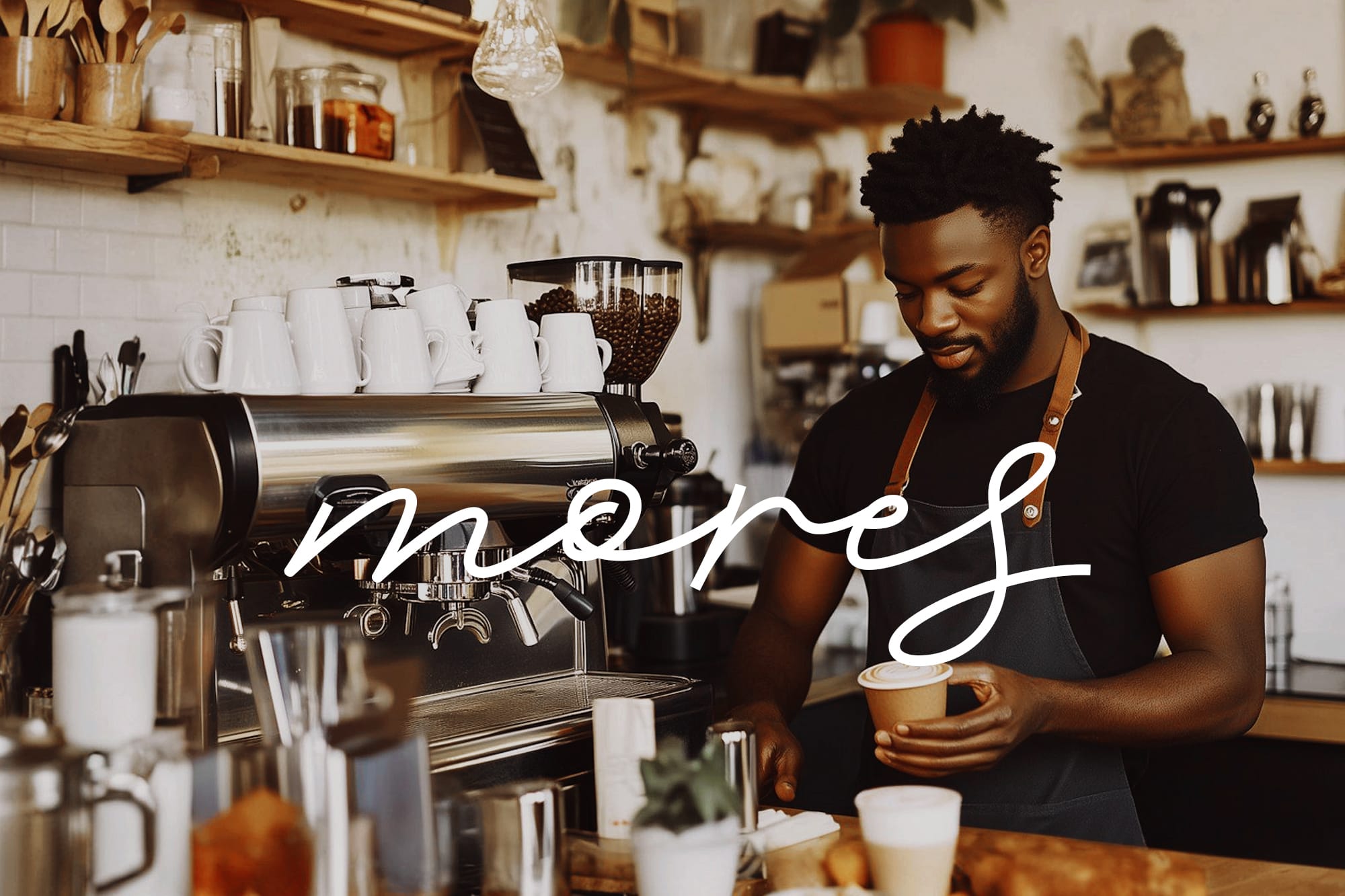
On a quiet street corner in the kind of neighborhood that still has quiet street corners, Mores Coffee doesn't announce itself loudly.
No neon. No line out the door. Just a hand-lettered sign, warm light spilling through a wide front window, and the particular smell — roasted, rich, grounding — that hits you half a block before you arrive. Step inside and the noise of the city, whatever city it is, falls away. The shelves are full. The counter is unhurried. Someone behind the bar is focused on a cup with the kind of attention that makes you want to watch.
This is what a great neighborhood café looks like. This is Mores.
The Origin
Mores Coffee opened three years ago with no investors, no branding agency, and no grand launch event.
Its founder, Marcus Webb, had spent eight years working in specialty coffee — as a barista, a roaster, a trainer — before deciding that the kind of café he wanted to exist in his neighborhood didn't exist yet. So he built it.
"I wasn't trying to build a brand," he says, pulling a shot with the practiced ease of someone who has done it ten thousand times. "I was trying to build a room. A specific room, for specific people, that felt like it belonged here."
The name came from a conversation with his grandmother, who used the word — an old-fashioned term for the customs and values that hold a community together — to describe what she thought was missing from modern life. Webb wrote it on a napkin and never changed it.
"It felt right. Coffee is a ritual. Rituals are how communities hold themselves together. I wanted the name to mean something."
The Coffee
Mores sources its beans from three roasters — one domestic, two international — chosen for relationship as much as quality.
Webb visits origin when he can, and the menu reflects the seasons and the harvest. The espresso changes every six to eight weeks. The filter offerings rotate more frequently. There is always something on the bar that Webb is personally excited about, and he will tell you about it at length if you ask — and sometimes if you don't.
"I want people to taste the difference between a washed Ethiopian and a natural one," he says. "Not because they need to know, but because it's interesting. Coffee is interesting. It came from somewhere specific. Someone grew it. That story is worth knowing."
The milk program is equally considered. Three options, all sourced locally, chosen because they behave well under steam and because the farms behind them align with how Webb thinks food should be produced.
The result is a cup — whether espresso, flat white, or a carefully brewed V60 — that tastes like someone cared about it. Because someone did.
The Space
The interior of Mores was designed by Webb himself, on a budget that required creativity over expenditure.
The shelves along the back wall were salvaged from a closed bookshop two streets over. The counter was built by a local carpenter who became a regular customer. The lighting — warm, low, the kind that makes everyone look like they're in a good mood — was the one thing Webb splurged on, because he knew it would set the tone for everything else.
There are fourteen seats. Webb has been offered the space next door twice and declined both times.
"Bigger means different," he says. "I know what this place is. I don't want to find out what it becomes when it's twice the size."
The fourteen seats are almost always full. The turnover is unhurried — nobody is rushing you, and the WiFi password is written on the chalkboard, no questions asked. People come to work. People come to read. People come to sit across from someone they love and have the kind of conversation that requires a good table and no urgency.
The Regular
Ask Marcus Webb what he's most proud of and he doesn't mention the coffee awards on the shelf behind him, though there are several.
He mentions a woman named Diane, who started coming in three years ago, two weeks after Mores opened. She came every morning. She always ordered the same thing. She always sat at the same table by the window. She and Webb exchanged maybe fifty words in the first six months.
"Then one day she told me that coming here was the only part of her day that felt like hers," he says. "That it was the one place where nobody needed anything from her. She just got to sit and drink coffee and be a person."
He's quiet for a moment.
"That's what I was trying to build. That's the whole thing, right there."
What Small Means
Mores will not become a chain. Webb has been approached — twice, now — by people with money and expansion plans, and twice he has said no.
"There's a version of this that scales," he acknowledges. "I've thought about it. But the thing that makes Mores what it is — the sourcing relationships, the fact that I'm behind this counter most mornings, the way the regulars know each other — that doesn't scale. You can't franchise a feeling."
What he is interested in is longevity. In being the kind of place that exists in twenty years, that becomes part of the furniture of a neighborhood, that people describe to newcomers as something they need to know about.
"I want to be a landmark," he says. "Not famous. Just — here. Still here."
Finding Mores
Mores Coffee is open Tuesday through Sunday, 7am to 4pm. No reservations. No app. Just show up.
Some things are still that simple.
