More Than a River Fixture: The Remarkable, Misunderstood Life of the Hippopotamus
From a distance, they look like rocks. Easy to miss, easy to dismiss. But the hippopotamus has been watching you since before you noticed it — and every experienced guide in Africa will tell you the same thing: there is no more misunderstood animal on the continent.





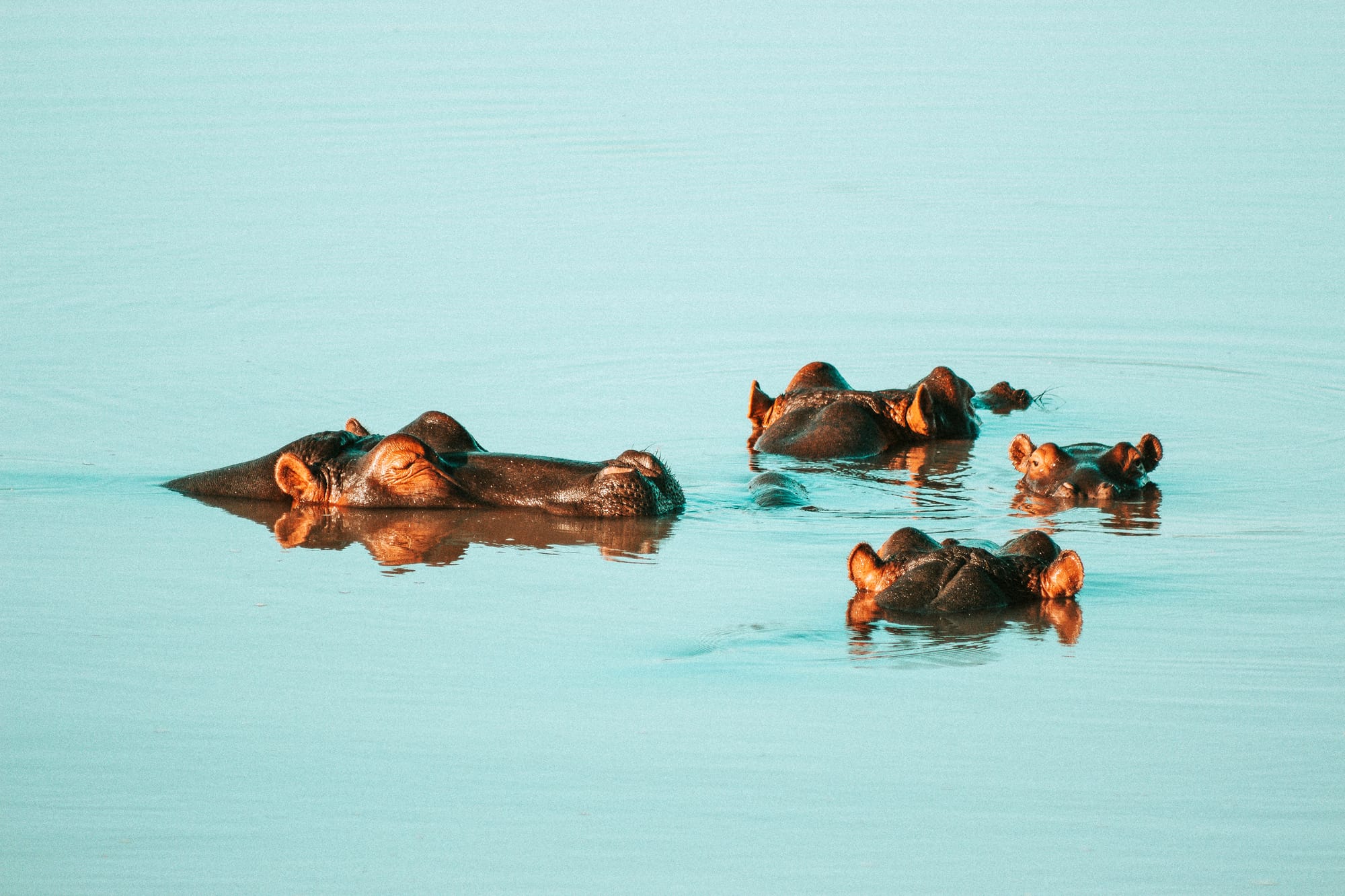
From a distance, they look like rocks.
Four dark shapes half-submerged in the turquoise shallows, barely moving, eyes and ears just clearing the waterline. Easy to miss. Easy to dismiss. The kind of animal that gets overshadowed in the safari highlight reel by the more photogenic drama of lions and leopards.
Get closer — carefully, from a boat, with a guide who knows the river — and the picture changes entirely.
The hippo is watching you. It has been watching you since before you noticed it. And the calm, heavy stillness of the animal at rest conceals something that every experienced guide in Africa will tell you with the same quiet emphasis: the hippopotamus is one of the most dangerous animals on the continent, and one of the least understood.
The Basics, Reconsidered
The common hippopotamus — Hippopotamus amphibius — is the third largest land mammal on Earth, after the elephant and the white rhinoceros. An adult male can weigh over three thousand kilograms. They can run at speeds of up to thirty kilometers per hour on land, faster than most humans, for short distances. Their canine teeth can reach fifty centimeters in length.
They are also, despite their barrel-shaped bodies and stubby legs, surprisingly graceful in water — not swimmers exactly, but expert walkers along river and lake beds, capable of holding their breath for up to five minutes, their buoyancy allowing them to move with a lightness that their mass on land never suggests.
They are not, as was once commonly believed, related to pigs. Their closest living relatives are, improbably, cetaceans — whales and dolphins. The evolutionary split happened approximately 55 million years ago, which means that the hippo's family tree connects it more closely to a humpback whale than to any other land mammal.
This is the kind of fact that, once you know it, makes you look at the animal in the water differently.
A Day in the Life
Hippos are nocturnal grazers — a fact that surprises many visitors who see them motionless in the water all day and assume they are doing nothing. They are not doing nothing. They are thermoregulating.
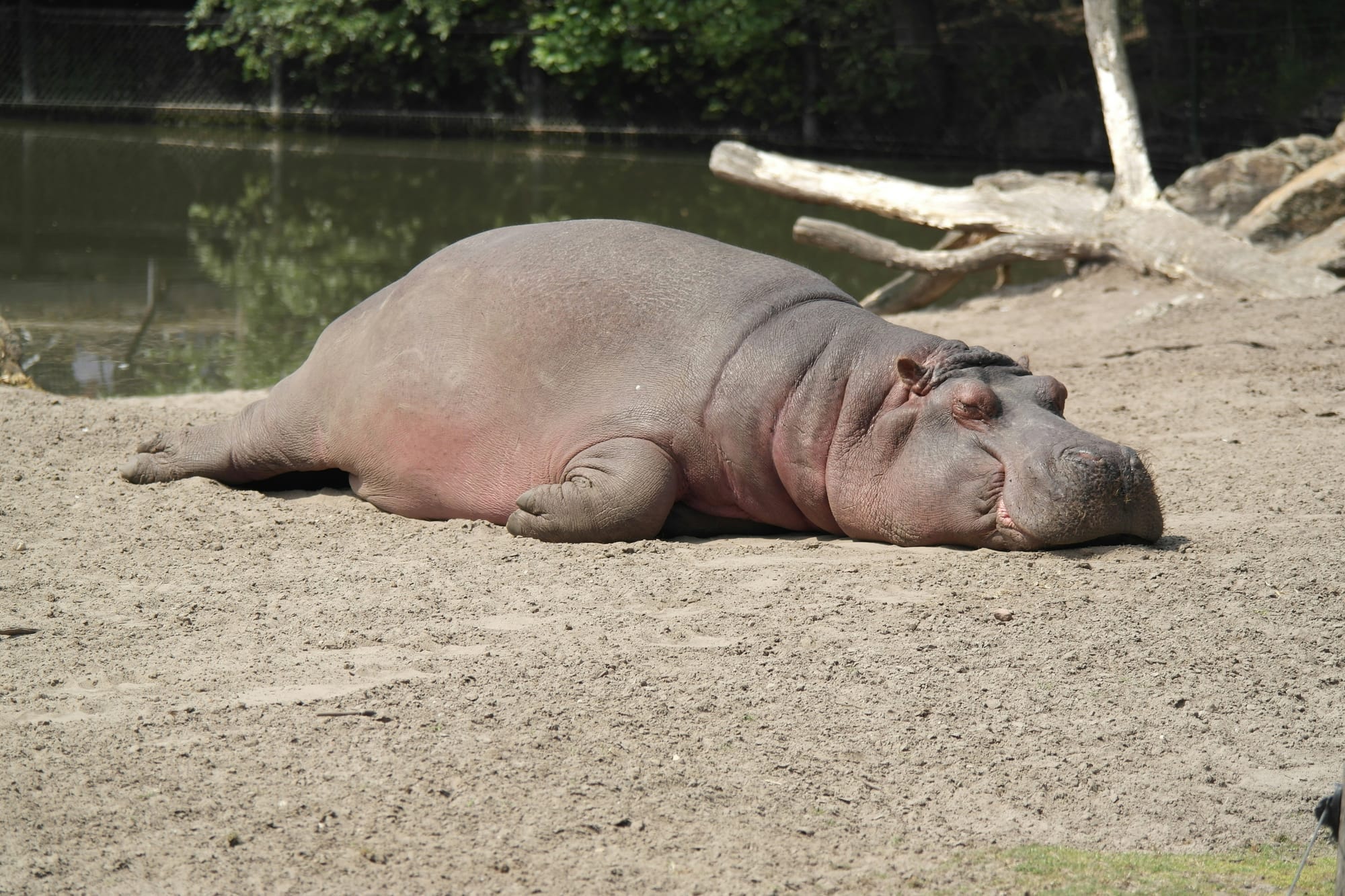
Hippo skin, for all its thickness, is highly sensitive to the sun. They have no sweat glands, but they secrete a reddish, oily substance — sometimes called "blood sweat," though it is neither blood nor sweat — that functions as both a natural sunscreen and an antimicrobial agent. It is one of the more extraordinary biological adaptations in the mammal world, and it gives sunbathing hippos their characteristic pink-tinged sheen.
During the day, hippos rest in the water or on the banks, conserving energy and staying cool. As darkness falls, they leave the water and travel — sometimes ten to fifteen kilometers — to their grazing grounds, where they consume up to forty kilograms of grass in a single night. By dawn, they are back in the water.
This rhythm has been essentially unchanged for millions of years. The hippo is, in this sense, one of the most conservatively successful animals on Earth — a design so effective that evolution has had little reason to alter it.
The Social Structure
A group of hippos — called a bloat, a pod, or a school depending on the source — is a more complex social unit than it appears from the bank.
Pods are typically led by a dominant male who controls a stretch of river or lake shore and the females within it. He defends his territory aggressively, marking boundaries with a behavior called dung showering — scattering excrement with a rapidly spinning tail — and engaging rival males in confrontations that can be severe and occasionally fatal.
Female hippos, by contrast, form cooperative social bonds within the pod. Calves are born in the water and are closely guarded, with females sometimes forming protective circles around young animals in the presence of threats. There are documented cases of female hippos defending calves that are not their own — a degree of collective care that suggests a social intelligence more sophisticated than the animal's reputation allows for.
The sounds that hippos produce — a combination of grunts, wheezes, and the resonant, territorial call that carries for kilometers across open water — are also produced partially underwater, making hippos one of the few mammals capable of vocalizing in both air and water simultaneously.
The Conservation Reality
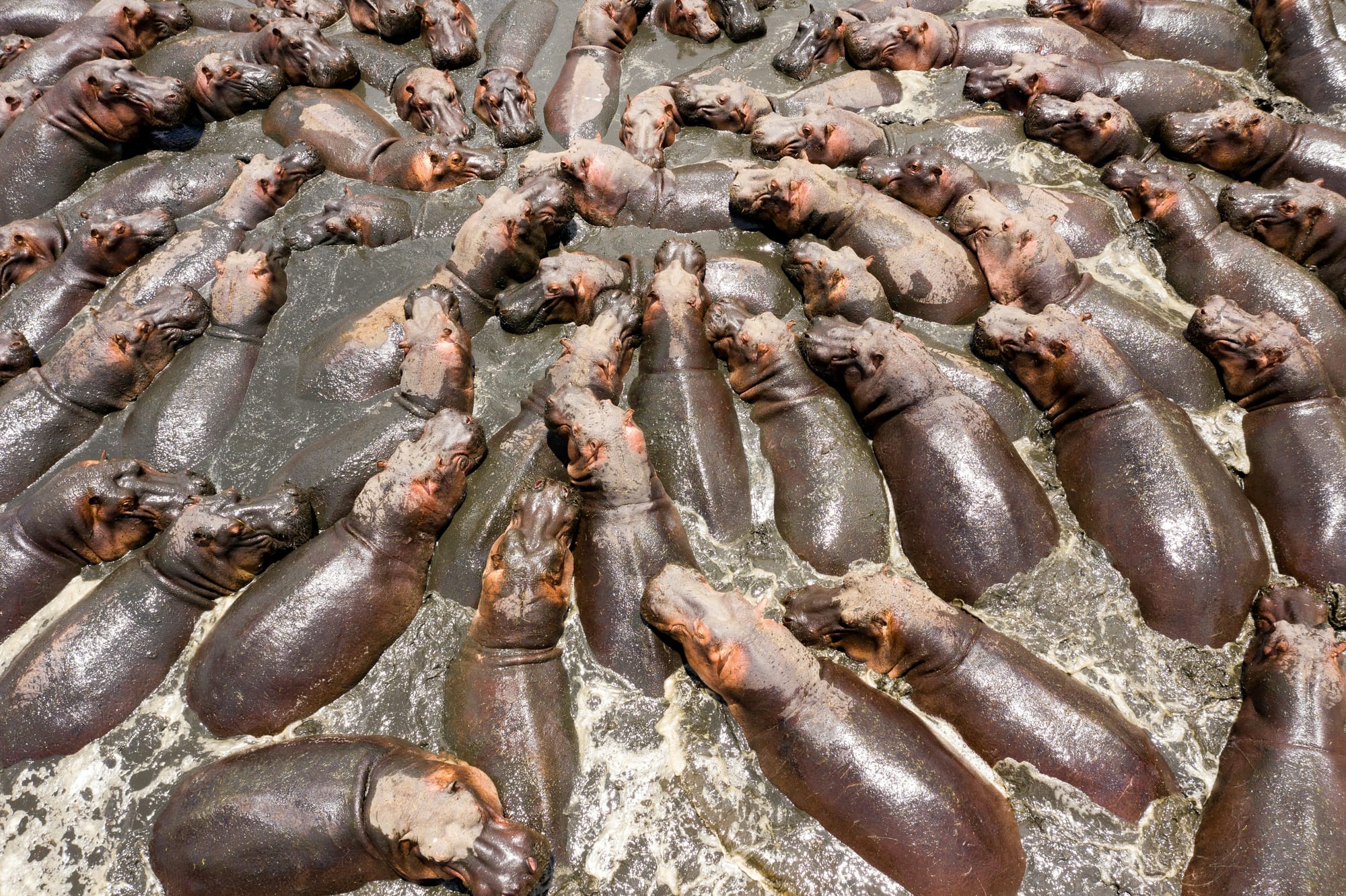
The hippopotamus is currently classified as Vulnerable on the IUCN Red List, with an estimated wild population of between 115,000 and 130,000 individuals — a number that sounds substantial until you consider that it represents a decline of between 7 and 20 percent over the last decade alone.
The threats are familiar: habitat loss as river systems are dammed, diverted, and degraded by agricultural and industrial use; poaching for ivory — hippo canines have historically been a significant source of ivory trade — and for bushmeat; and the growing competition between expanding human populations and animals that require large territories of undisturbed river and floodplain.
Climate change adds another layer of pressure, reducing water levels and disrupting the seasonal flood cycles that hippos — and the entire river ecosystems they help maintain — depend on.
Because they do maintain those ecosystems. The hippo's role as what ecologists call an ecosystem engineer is increasingly understood and increasingly recognized as critical. Their grazing keeps riverbanks clear. Their dung fertilizes aquatic ecosystems, feeding the algae and fish that form the base of the food chain. The paths they cut through riverine vegetation create channels that other animals use.
Remove the hippos from a river system and the effects cascade through every level of the ecology.
What the Water Holds
Back on the river, the four hippos are still there.
One has opened an eye. Another has shifted slightly, creating a small ripple that moves outward and flattens in the turquoise water. A third has its mouth slightly open — not a yawn exactly, but the beginning of one, a slow display of teeth that is simultaneously relaxed and quietly authoritative.
They are not doing nothing. They are being, completely and efficiently, exactly what they are — ancient, adapted, intricately connected to the river and the ecosystem around them in ways that took millions of years to develop and could be undone in a generation.
The least we can do is look. And understand what we're looking at.
The common hippopotamus is listed as Vulnerable on the IUCN Red List. Conservation organizations working on hippo habitat protection include the IUCN SSC Hippo Specialist Group and the African Wildlife Foundation.
