Dust and Gold: The Modern American West Road Trip You Need to Take Before Everyone Else Does
Somewhere on a two-lane highway in the American West, the last cell signal drops, the last podcast ends, and the landscape takes over completely. The sky is enormous. The dust hangs gold in the afternoon light. And a figure on horseback reminds you what unhurried actually means.

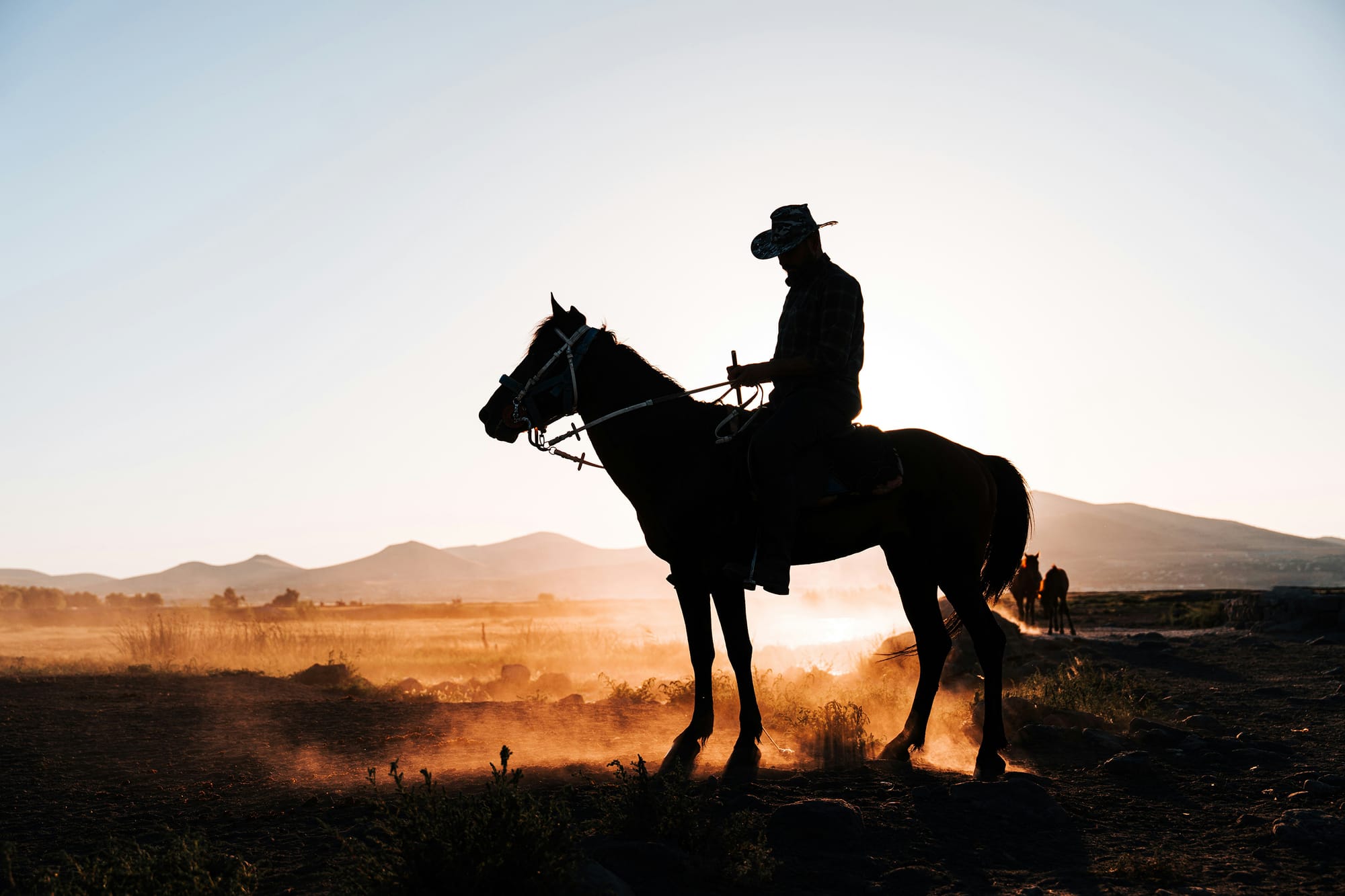
There is a moment, somewhere on a two-lane highway in the American West, when the last cell signal drops and the last podcast ends and the landscape takes over completely.
The sky is enormous. The road is straight for longer than seems reasonable. The dust from a dirt track off to the right hangs gold in the afternoon light, and somewhere in the middle distance a figure on horseback moves through it all at the pace that the West has always moved — unhurried, deliberate, belonging to a rhythm that has nothing to do with yours.
You slow down. Not because you have to. Because the landscape asks it of you.
This is what the American West road trip does to people. And it is, right now, one of the last great travel experiences that rewards showing up without too much of a plan.
Why Now
The American West has been a travel destination for generations, but something has shifted in the last few years.
The national parks — Zion, Bryce, Arches, the Grand Canyon — are increasingly managed experiences, with timed entry permits, crowded trails, and the particular exhaustion of a beautiful place that too many people are trying to experience simultaneously. They are still worth visiting. They are no longer the point.
The point, increasingly, is everything between them.
The two-lane state highways that connect small towns with populations under a thousand. The BLM land that stretches for miles without a fence or a sign. The roadside diners that have been serving the same breakfast since 1974. The ghost towns that are genuinely ghostly, not curated. The ranches that offer a night or a week in the kind of landscape that the Instagram version of the West can only approximate.
The travelers who have figured this out are keeping it relatively quiet. The window, as with all things worth experiencing before they become overrun, is open but not indefinitely.
The Route
There is no single correct American West road trip, which is part of what makes planning one so pleasurable.
What follows is not a definitive itinerary. It is a suggestion — a loose arc through terrain that rewards deviation, built around the principle that the best discoveries on a road trip are the ones that weren't on the map.
Start: Marfa, Texas
Marfa is the established entry point for a certain kind of West Texas experience — equal parts art world outpost and genuine high desert town, with a quality of light that painters and photographers have been chasing for decades. Spend two nights. Drive the Pinto Canyon Road south toward the border. Eat at the food trucks on the square. Wake up early and watch the sky turn colors over the Chinati Mountains.
Then head north. The real trip begins when you leave.
Through New Mexico
The drive north from Marfa into New Mexico passes through terrain that looks like it was designed for exactly this purpose — wide basin valleys, the Sacramento Mountains rising in the east, the occasional roadside shrine marking something you'll never know the full story of.
Alamogordo and the White Sands National Park are worth a stop — walk into the gypsum dunes at dusk when the light turns everything impossible colors and the temperature drops fast. Camp if you can. The night sky here is one of the darkest in the continental United States.
From there, north to Santa Fe — a city with the density of cultural experience that justifies two or three days — and then west into the high plateau country that most people drive through without stopping.
Stop.
The Colorado Plateau
The stretch of country that covers the Four Corners region — southeastern Utah, northeastern Arizona, southwestern Colorado, northwestern New Mexico — is arguably the most dramatic landscape in North America.
Canyon de Chelly. Monument Valley at dawn before the tour groups arrive. The Valley of the Gods, which has all the drama of Monument Valley and a fraction of the visitors. Canyonlands, which requires more effort to experience properly than most people are willing to give it, and rewards that effort accordingly.
This is the part of the trip where you stop checking the schedule. The roads demand attention. The landscape demands attention. The combination produces a kind of presence that is difficult to manufacture and impossible to buy.
North to Montana
The drive north from the Colorado Plateau through Utah and into Wyoming and eventually Montana is a week or two if you do it properly — which means stopping when something looks interesting, taking the unpaved road when it seems like it might lead somewhere, eating in towns where you're the only out-of-state plate in the parking lot.
The Bighorn Mountains in Wyoming. The Beartooth Highway, the most spectacular paved road in the country, open only in summer, crossing the Beartooth Plateau at nearly eleven thousand feet. The first sight of the Northern Rockies appearing on the horizon when you come north out of the basin country.
Montana is the destination, in the sense that the trip has one. But the truth is that every mile of it is the destination.
How to Do It Right
Take longer than you think you need. The temptation to cover ground is real and almost always wrong. The best experiences on a Western road trip are the ones that happen when you're not trying to get anywhere.
Get off the highway. The interstates are efficient and completely beside the point. The two-lane state and county roads are where the West actually lives.
Talk to people. The rancher at the gas station. The woman running the only diner for sixty miles. The retired park ranger at the campground. The West is full of people with stories, and they will tell them to anyone who isn't obviously in a hurry.
Bring more water than you think you need. This is not a metaphor.
Leave the itinerary loose. The best version of this trip is the one where you find the dirt road that leads to the canyon that nobody told you about. You can't plan for that. You can only leave room for it.
The Golden Hour
Every evening, somewhere on this trip, the light will do something extraordinary.
It happens fast — twenty minutes, maybe thirty, when the sun drops to the right angle and the dust in the air catches it and everything turns gold. The shadow of a horse and rider stretches across the ground. The mountains in the distance go purple. The sky above them stays pale and enormous.
You stop. You get out of the car. You stand in it.
This is the thing that no photograph — however good, however carefully composed — fully captures about the American West. The scale of it. The way it makes you feel simultaneously very small and very present. The particular quality of being somewhere that has been exactly this for longer than any human structure has stood.
Drive west. Find your golden hour.
It's out there. It's waiting.
Best driven between May and October. Summer temperatures in the desert Southwest can exceed 110°F — plan accordingly and carry extra water. Many of the best roads are unpaved; a high-clearance vehicle is recommended but not always required.
