First Tracks: The Alpine Snowboard Trip That Will Ruin Every Other Winter For You
There is a sound that powder snow makes under a board that has no equivalent anywhere else. A soft, dense compression — almost silent — and then you are floating, briefly, in a way that the physics of it don't quite explain. Three seconds when nothing else exists. That is what people are chasing.

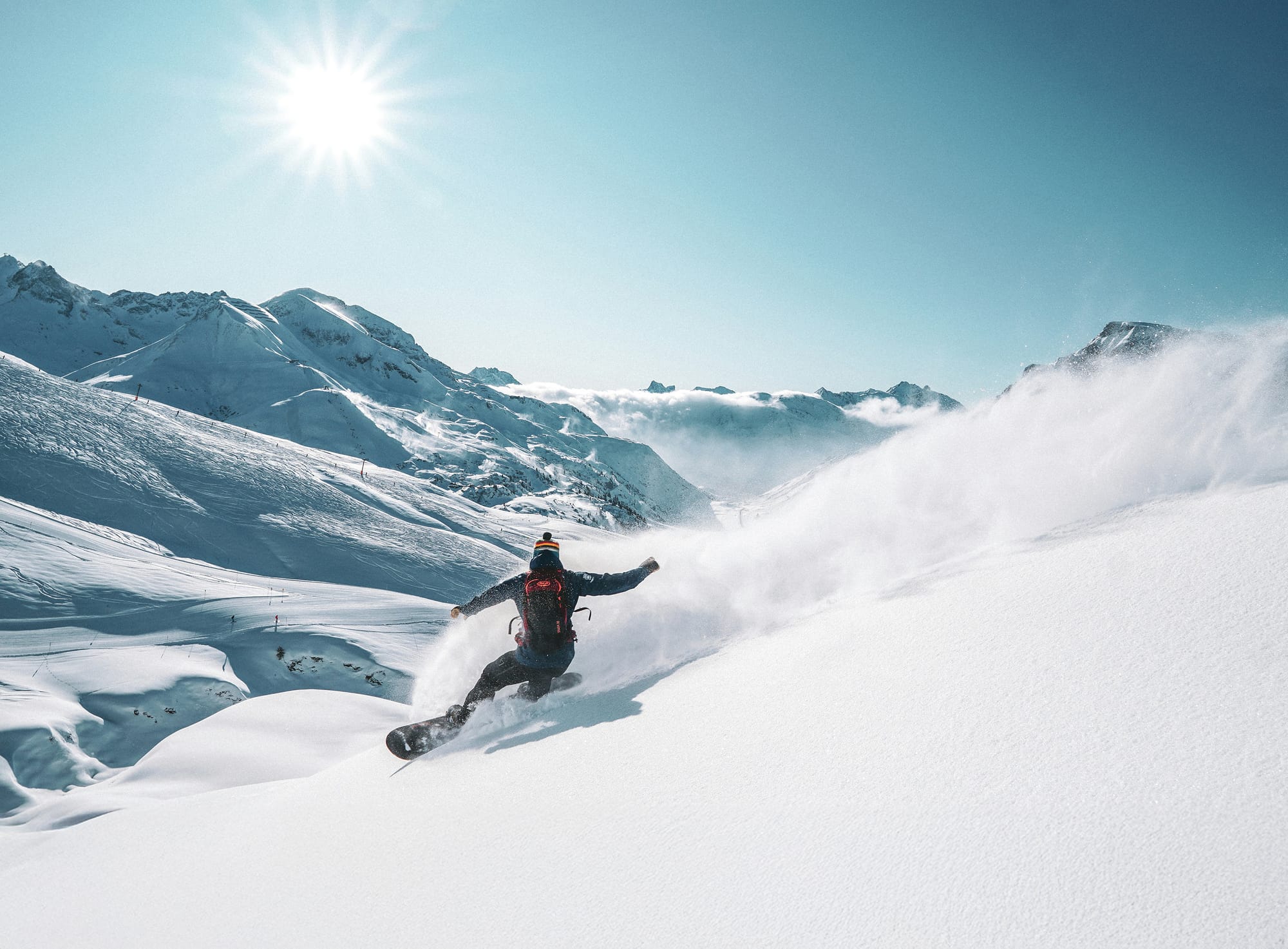
There is a sound that powder snow makes under a board that has no equivalent anywhere else in the world.
Not the scrape of groomed piste. Not the crunch of hardpack. A soft, dense compression — almost silent — as the board sinks slightly and then releases, and you are floating, briefly, in a way that the physics of it don't quite explain to the body experiencing it. The mountain drops away beneath you. The spray rises behind you. The sun is a hard white star above the peaks.
For approximately three seconds, nothing else exists.
That is what people are chasing when they book the flights, drag the gear bag through two airports, and spend a week on a mountain in the Alps. Not the après-ski, not the Instagram frame, not even the views — though the views are extraordinary. They are chasing those three seconds, repeated as many times as the legs and the snow will allow.
Everything else on the mountain is in service of that.
The Alps, Understood Correctly
The European Alps are the most developed ski and snowboard terrain on Earth — and that development is both their greatest asset and their most significant limitation.
The greatest asset: infrastructure that nowhere else matches. Lift systems that move thousands of people per hour to terrain that would take hours to access on foot. Snowmaking that extends the season at lower elevations. Grooming that produces perfect corduroy by 8am regardless of what the previous afternoon's skiers did to the surface. The resort villages that have been refining the business of keeping winter sports people comfortable and fed and warm for a century.
The limitation: all of that infrastructure exists to funnel people onto the same groomed runs, through the same lift queues, toward the same mountain restaurant at the same lunch hour.
The Alps reward the rider who is willing to step slightly off that conveyor belt. To take the side gate that opens onto ungroomed terrain. To lap the chairlift before the mountain is officially open and find the snow before anyone else reaches it. To look at the resort map and identify what's on the other side of the ridge rather than just what's on the trail map.
The mountain that most visitors see and the mountain that exists behind it are not the same mountain.
Where to Go
Verbier, Switzerland remains the benchmark for serious freeriders in the Alps — not because its groomed runs are exceptional (they are fine), but because the terrain accessible from the top of the Mont Fort cable car, at 3,330 meters, is some of the most consequential off-piste in Europe. The Vallon d'Arby, the north face descents toward Siviez, the routes that require a guide and a transceiver and a genuine respect for avalanche conditions — this is terrain that asks something of the rider before it gives anything back.
Stay in the village, not the resort. The chalets are expensive. They are worth it.
Chamonix, France is the most serious mountain town in the Alps and the one that attracts the most serious riders. The Vallée Blanche — a 24-kilometer descent from the Aiguille du Midi at 3,842 meters through the Mer de Glace glacier — is one of the great mountain experiences on Earth. It is not technically difficult. It is enormous, and cold, and remote enough that the consequences of a problem are real. Go with a guide the first time. Go in good visibility. Go early.
The town itself is worth a day — a proper Alpine working town, not a resort village, with the kind of bars and restaurants that exist to serve people who work on the mountain rather than people who are visiting it.
Arlberg, Austria — the connected resorts of St. Anton, Lech, and Zürs — is where powder riding in the Alps was essentially invented, and the terrain above the groomed pistes remains some of the best in Europe. The Valluga, at 2,811 meters, is accessible only with a certified guide and offers descents into terrain that the lift map doesn't acknowledge. The snow quality here, fed by storms that come in from the west before the moisture is stripped out by the Swiss ranges to the north, is consistently exceptional.
The Freeride Principle
Freeride snowboarding — riding ungroomed, unprepared, uncontrolled terrain — is the version of the sport that the groomed resort experience is, for many riders, a warm-up for.
It is also the version that most honestly reflects what riding in the mountains actually is, before the resort industry turned it into something manageable.
On groomed piste, the variables are controlled. The surface is predictable. The hazards are marked. The experience is reliable in the way that a well-maintained road is reliable — you know roughly what you're getting, and the surprise is bounded.
Off-piste, none of that is true.
The snow changes character constantly — wind-affected crust at the ridge, wind-deposited powder in the bowl below it, a strip of sun-affected slush on the south-facing pitch before it opens onto the shaded face where the cold dry powder has been sitting undisturbed since the last storm. Reading those transitions correctly, adjusting instantly, making decisions at speed about a surface that is revealing itself as you cross it — this is the skill that groomed riding doesn't build and freeride demands.
It also produces, when everything aligns correctly, the three seconds that started this article.
The compression. The float. The spray rising behind you into cold mountain air.
The Morning
Every serious powder day begins the same way.
You are awake before the alarm. Not because you set a second alarm, but because something in the body knows what the day holds and refuses to sleep through it. You check the snow report, though you already know what it says — you've been checking it since the day before. You eat something. You are at the lift before it opens.
The first chair of the day on a powder morning is one of the better experiences that winter sport offers. The mountain is quiet. The snow is untracked. The light, coming low across the peaks at this hour, is flat and soft and makes the untouched surface look like fabric.
You drop into it. The sound is exactly right. The spray rises.
Three seconds that justify everything that came before them.
What the Mountain Teaches
Every sport that takes place in a natural environment teaches a version of the same lesson, and snowboarding in the mountains is no exception.
The mountain is not interested in your ability or your equipment or your ambition. It will give you the best run of your life and, the same afternoon, close itself in cloud and wind and make the same terrain dangerous to the point of inaccessibility. It operates on its own schedule. The good days are not earned — they are given, when conditions align, to whoever is there and ready.
Be there. Be ready. Go when the mountain offers it and come down when it doesn't.
That rhythm — of patience and readiness and the willingness to commit fully when the moment arrives — is available at the top of any chairlift, in any mountain range, on any day when the snow is right and the sky is clear and the powder is untracked.
Everything else is just getting there.
The Alps are best accessed between December and April, with peak powder conditions typically in January and February. Off-piste riding requires appropriate avalanche safety equipment and ideally a certified mountain guide. Always check local avalanche forecasts before riding uncontrolled terrain.
