Four Wheels and a Board: Why Skateboarding Was Never Just a Sport
Skateboarding has always resisted the clean narrative. For fifty years, institutions have been trying to decide what it is — a sport, a subculture, an art form. The honest answer is all of those things and none of them fully. That ambiguity is not a problem to solve. It's the whole point.


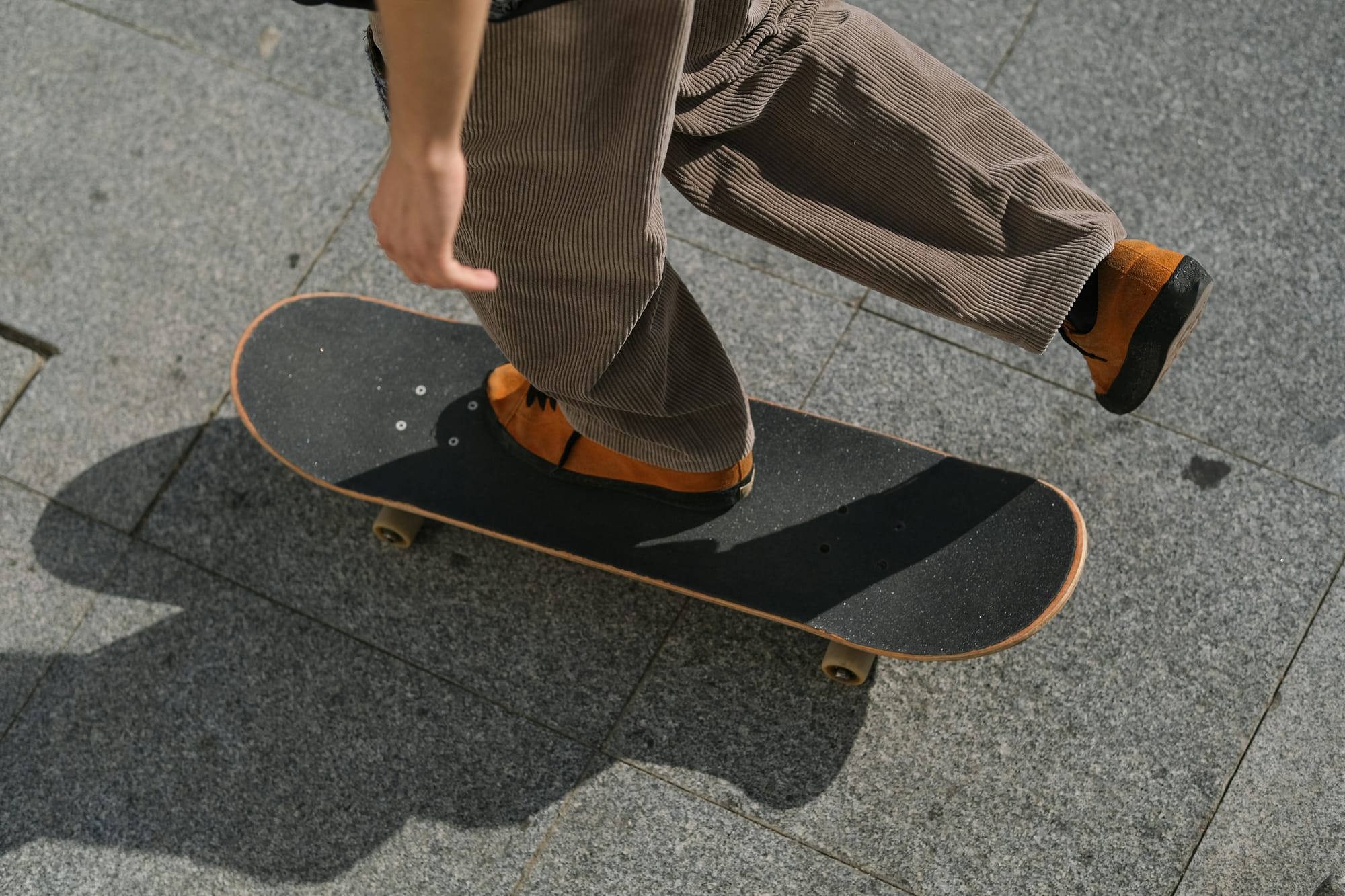
The photograph doesn't show a face.
Just feet. Corduroy pants, amber suede shoes, a black deck angled slightly off the ground on granite pavement. A shadow stretching out beside it. Somewhere in the frame, a trick is either beginning or ending — it's impossible to tell which, and that ambiguity is, somehow, exactly right.
Skateboarding has always resisted the clean narrative. The beginning and the end are less interesting than what happens in between. And what happens in between has never fit neatly into any category the mainstream keeps trying to build for it.
The Category Problem
For fifty years, various institutions have been trying to decide what skateboarding is.
A sport? It was excluded from that category for decades — too individual, too unstructured, too resistant to the scoring systems and competitive frameworks that organized sport requires. Then it was included, controversially, in the Olympic Games, and a new argument began about whether inclusion had changed it or merely revealed how poorly the category fit.
A subculture? For a generation, yes — defined by its outsider status, its DIY infrastructure, its hostility to the mainstream that had no use for kids grinding ledges in parking lots. Then the mainstream decided it had very specific use for that aesthetic, and skateboarding became one of the most commercially lucrative visual languages in the history of youth culture.
An art form? The skaters who pushed the boundaries of what was technically possible — who approached a staircase or a handrail or an empty swimming pool as a creative problem to be solved rather than an obstacle to be avoided — have always understood it this way, even when nobody else did.
The honest answer is that skateboarding is all of these things and none of them fully, and the attempt to resolve that ambiguity by assigning it a single category misses what makes it interesting.
"You start seeing everything differently," a skater once described it. "A set of stairs that everyone walks past without seeing becomes something you think about for a week. You're trying to figure out what it can do. What you can do with it."
What It Actually Is
Skateboarding is, at its core, a practice of creative problem-solving in public space.
The city — its ledges, its stairs, its banks and rails and plazas and parking structures — is not incidental to skateboarding. It is the material. Every urban surface is a potential line, a potential obstacle, a potential trick. The skater moving through a city is reading it differently than everyone else — not for the most efficient path from A to B, but for the creative possibilities embedded in its architecture.
This is not a trivial reframing. It represents a fundamentally different relationship to the built environment — one that reclaims public space as a site of play and creativity rather than pure transit. The city as skatepark is not a metaphor. It is a perceptual shift that changes how the person making it moves through the world.
The Failure Education
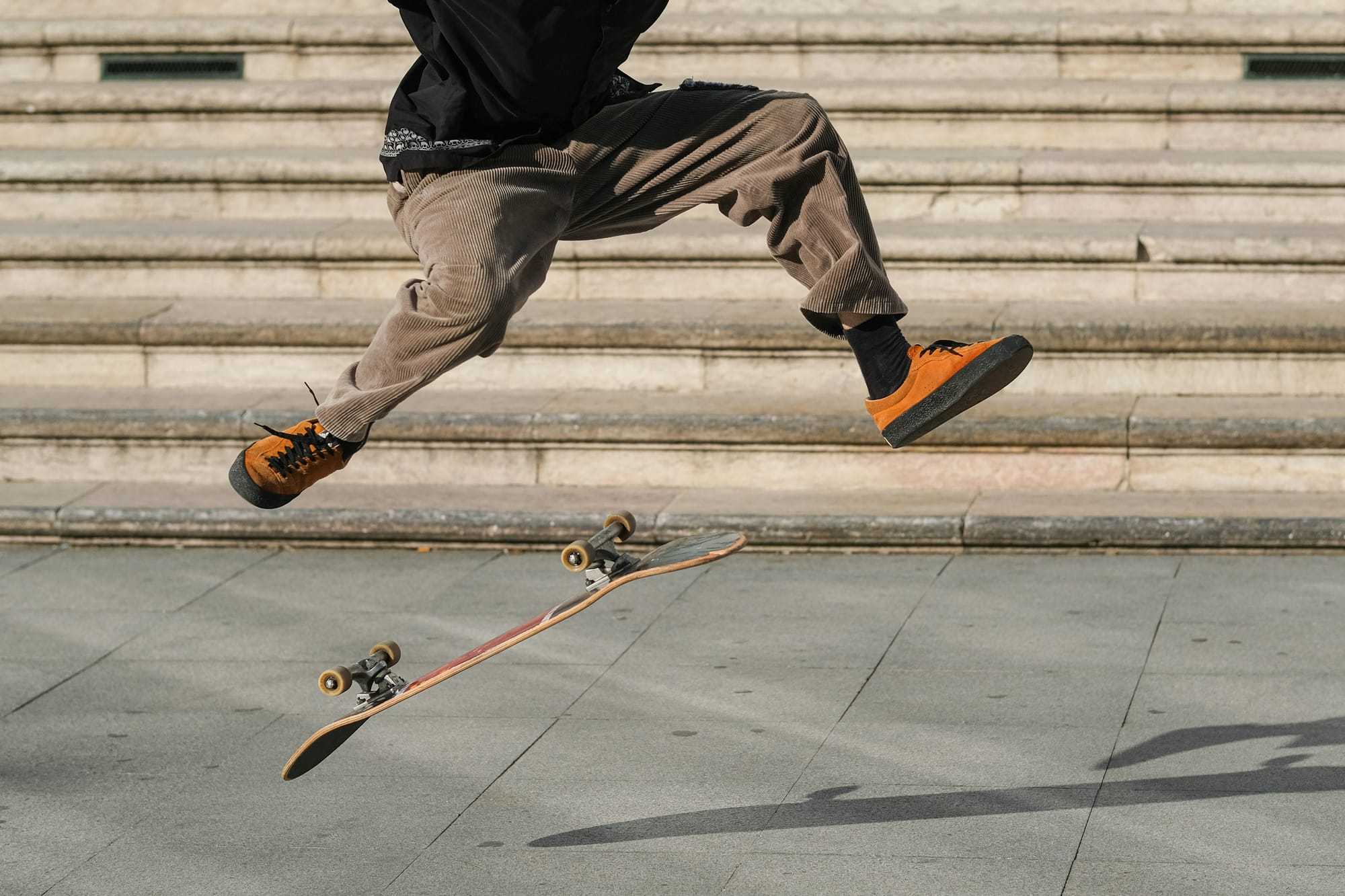
No sport — and for the sake of argument, let's use the word — teaches failure more consistently or more immediately than skateboarding.
You try the trick. You fall. You try it again. You fall differently. You try it again, adjust something small — the foot placement, the timing, the weight distribution — and you fall again. This process repeats, potentially for hours, potentially across multiple sessions, potentially for weeks, until the trick either happens or it doesn't.
There is no coach calling the drill. There is no teammate to cover for the failure. There is no opponent to blame. There is just the trick, and the gap between being able to do it and not being able to do it, and the decision about whether to keep trying.
The psychological resilience this builds is not incidental. It is the core pedagogy of the activity. Every skater, without exception, has spent more hours failing than succeeding. The relationship with failure that this produces — the understanding that failure is not a verdict but a step, that persistence is the primary variable, that the gap between can't and can is filled with repetition — is one of the more useful things a person can carry into any other domain of life.
The Community That Built Itself
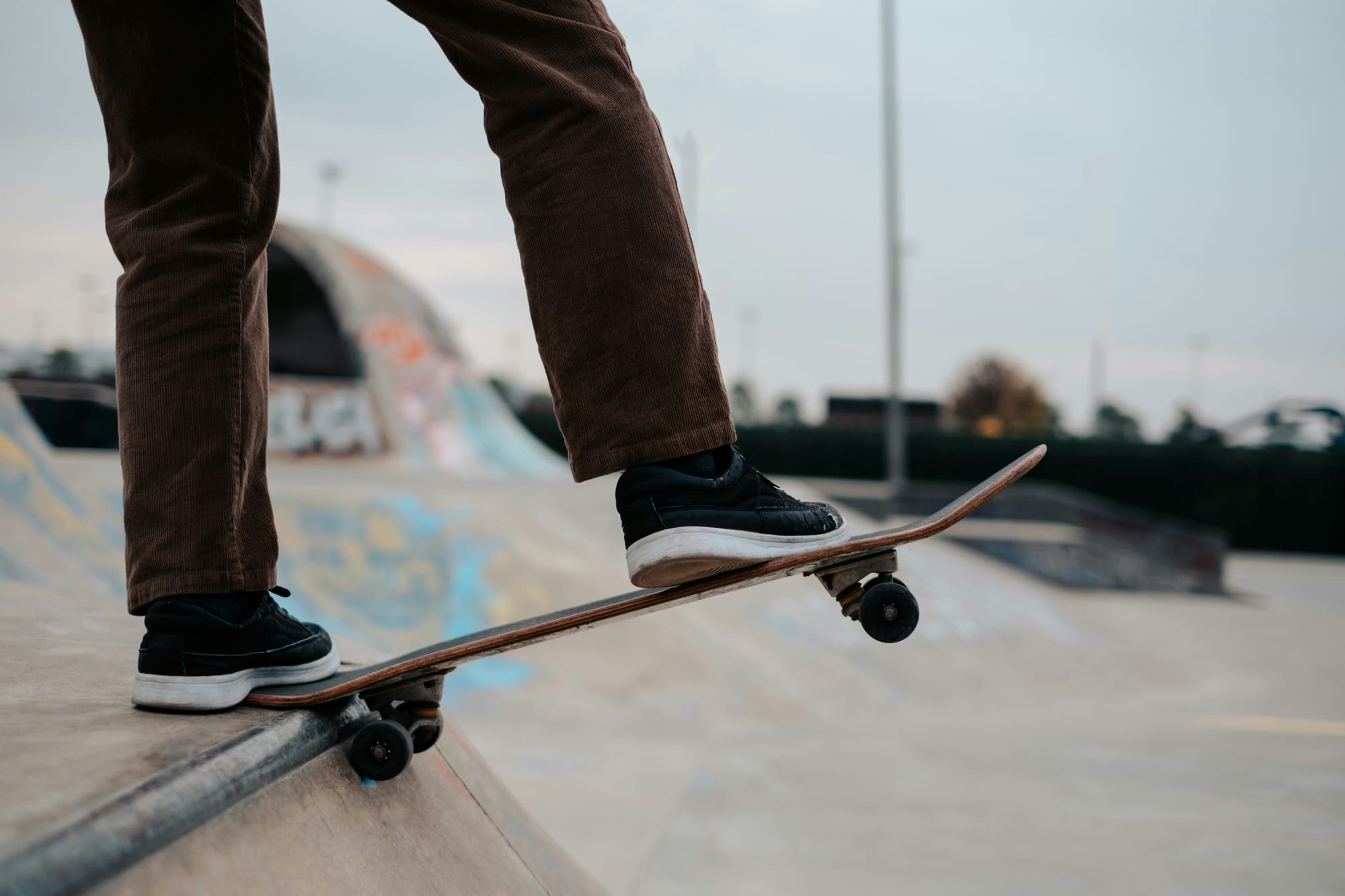
Before skateparks were funded by municipalities, before brands decided that skate aesthetics moved product, before the Olympics made it legible to mainstream sports culture — skateboarding built its own infrastructure.
The spots were found, not made. The footage was shot on consumer cameras by friends. The magazines were produced by skaters for skaters. The culture was transmitted through VHS tapes passed between kids who had no other way to see what was being done elsewhere. The community policed its own standards — not through formal institutions but through the informal, occasionally brutal, highly effective social mechanisms of a group of people who shared a practice and took it seriously.
This self-sufficiency — the capacity to build what you need when the mainstream won't provide it — is part of what has made skateboarding so durable across decades that have seen dozens of youth cultures rise and dissolve. It doesn't require permission. It doesn't require approval. It requires a board, a surface, and the willingness to keep trying.
What the Olympification Changed
The inclusion of skateboarding in the Tokyo 2020 Olympics — and its continuation in Paris 2024 and beyond — has produced a genuine and unresolved tension in the culture.
On one side: the argument that Olympic inclusion legitimizes the activity, expands its reach, and provides pathways for young skaters in countries where the infrastructure to support the sport would otherwise not exist. The athletes who competed — many of them teenagers — were extraordinary, and their performances introduced the activity to an audience it would never otherwise have reached.
On the other side: the argument that the Olympic format — scored runs, judged by criteria developed for an activity that has historically resisted external judgment, broadcast in the format of a conventional sports competition — fundamentally misrepresents what skateboarding is. That the version of skateboarding that fits into an Olympic broadcast slot is a version that has been trimmed to fit, and that the trimming loses something essential.
Both arguments are correct. That tension is probably permanent, and that's fine. Skateboarding has always contained contradictions. It is used to them.
The Feet on the Board
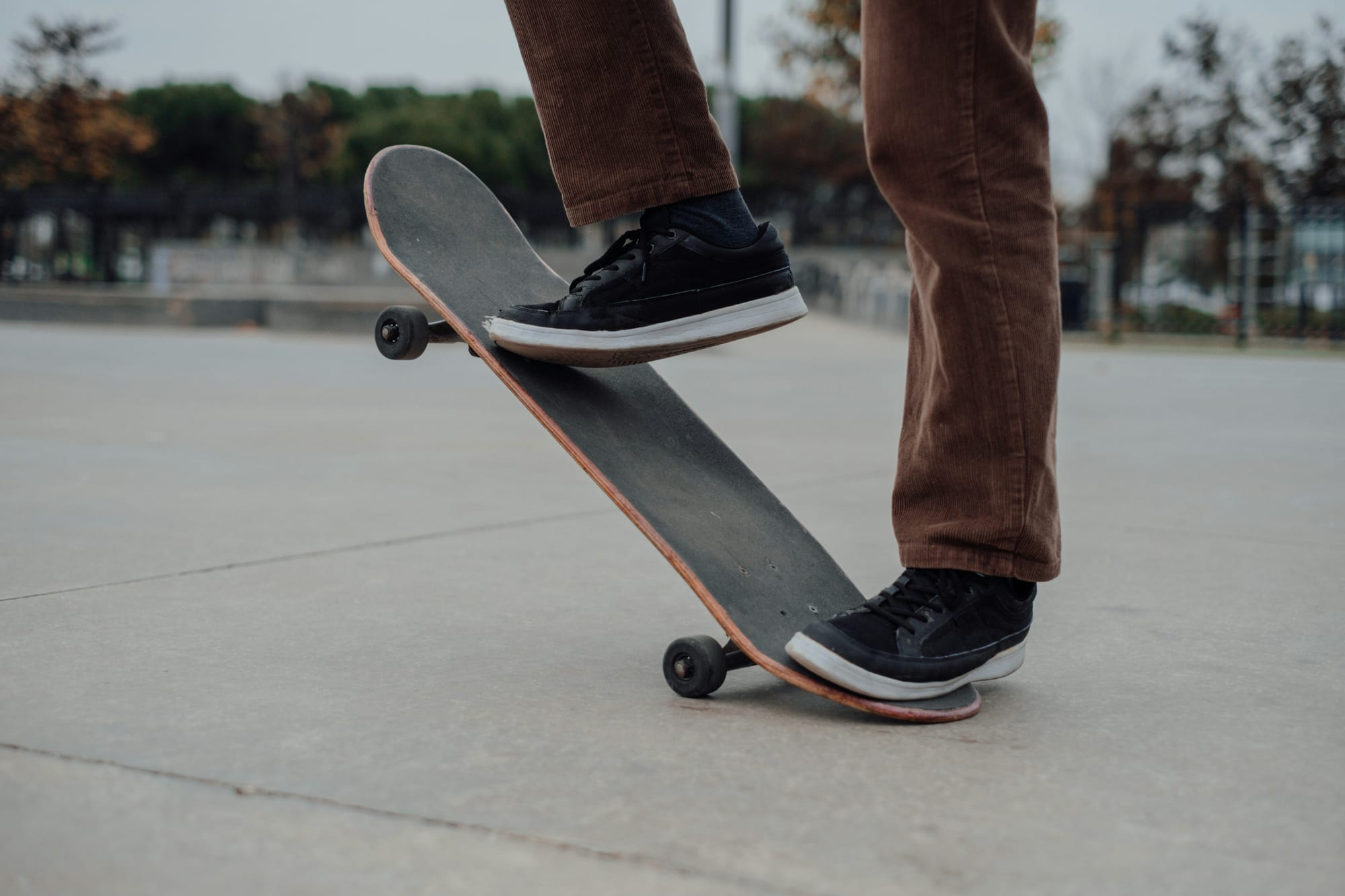
Back to the photograph.
Feet on a board. A shadow on granite. A trick in progress or complete — the image doesn't resolve it, and maybe that's honest.
Skateboarding has never been fully resolvable. It has been, since the beginning, a practice that exists in the gap between categories — not quite sport, not quite art, not quite subculture, not quite mainstream. It has been uncomfortable in every box anyone has tried to put it in, and it has outlasted every attempt to define it from the outside.
The feet keep moving. The board keeps rolling. The city keeps offering surfaces to read and problems to solve.
That's enough. That's always been enough.
Opinions expressed in this article are those of the author and do not represent the editorial position of this publication.
