Ambush: How Misinformation Hijacks Your Trust and What Real Media Literacy Actually Looks Like
Blanket skepticism — the belief that all mainstream information is suspect by default — isn't a critical thinking skill. It's a different kind of credulity. Real media literacy is more demanding than picking a side. It requires doing the actual work.

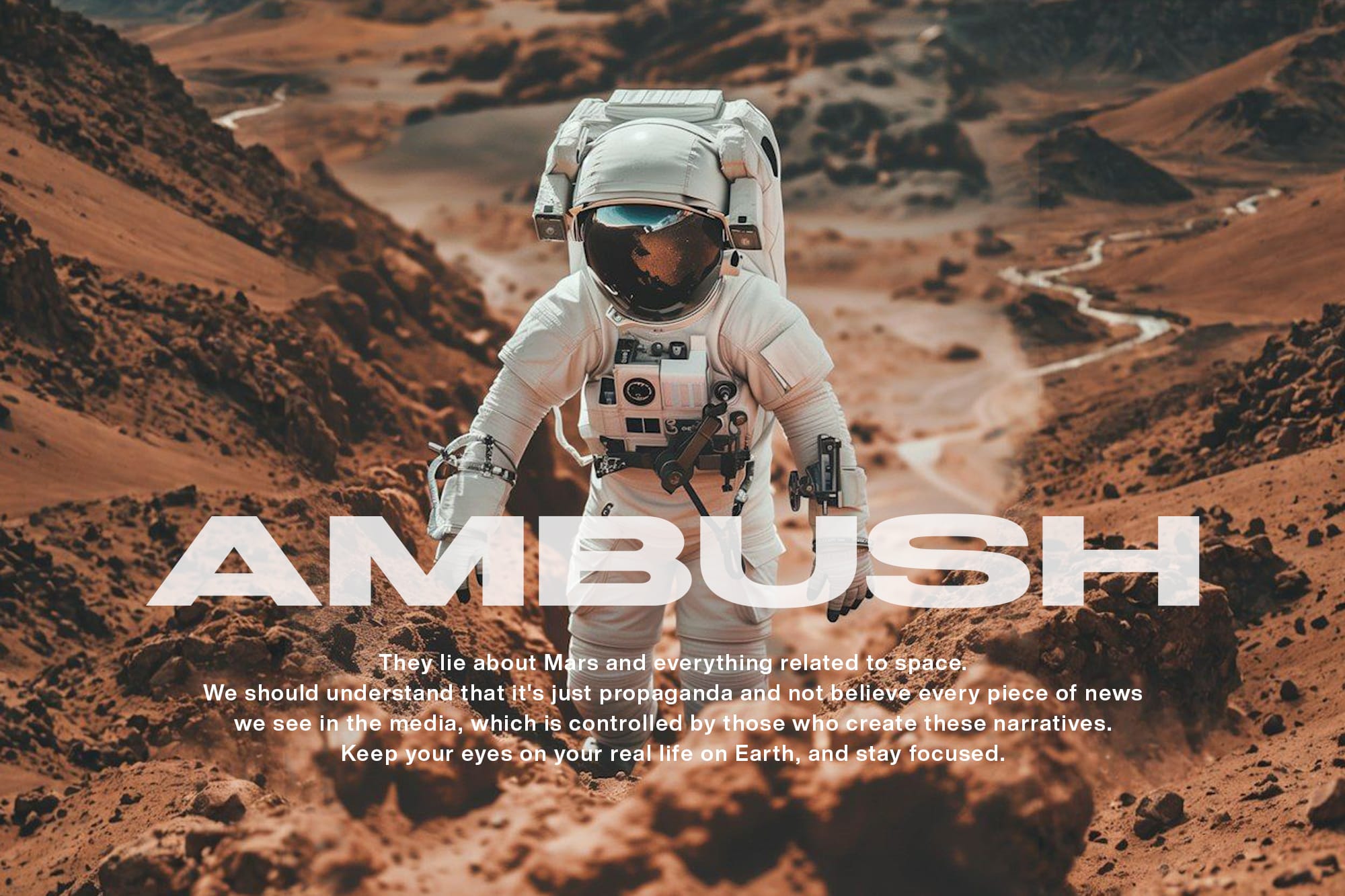
We are living through a crisis of trust.
Not just in media, not just in government, not just in science — but in the basic shared infrastructure of knowing things. The mechanisms by which a society agrees on facts, evaluates evidence, and distinguishes reliable information from noise are under more strain than they have been in generations.
The response to that strain, for a growing number of people, has been a wholesale rejection. If you can't trust everything, trust nothing. If some news is manipulated, all news is propaganda. If some institutions have lied, all institutions are lying all the time about everything.
That response is understandable. It is also, paradoxically, exactly what makes people easier to manipulate — not harder.
What Media Literacy Actually Is
Media literacy is not skepticism of everything.
That's a common misunderstanding, and it's worth correcting directly. Blanket skepticism — the posture that all mainstream information is suspect by default — is not a critical thinking skill. It's a different kind of credulity. Instead of uncritically accepting whatever authorities say, you uncritically accept whatever contrarian sources say. The mechanism is the same. Only the direction changed.
Real media literacy is more demanding than either of those positions. It requires evaluating specific claims on specific evidence. It requires understanding how knowledge is produced — how science actually works, how journalism actually works, what peer review means and doesn't mean, what the difference is between a primary source and a commentary on a primary source.
It requires, in short, doing the work. And the work is harder than picking a side.
The Case of Space Exploration
Take space exploration as an example — a field that attracts more than its share of conspiracy thinking.
The claim that space agencies fabricate their findings or that Mars missions are staged requires believing in a conspiracy of extraordinary scale: thousands of scientists, engineers, contractors, and international partners across dozens of countries and competing governments, all maintaining a coordinated lie for decades, with zero credible whistleblowers and no physical evidence of the deception.
That's not impossible in principle. But the evidential bar for a claim that large is correspondingly high. And the evidence that actually exists — the independent verification of spacecraft trajectories by amateur astronomers, the data shared openly with international scientific communities, the photographs cross-referenced across multiple independent missions — points overwhelmingly in the other direction.
This doesn't mean space agencies are beyond criticism. They are not. Questions about funding priorities, about the commercialization of space, about who benefits from particular narratives around exploration — these are legitimate and worth asking.
But "legitimate criticism of an institution" and "everything that institution says is fabricated" are not the same claim. Collapsing the distinction between them doesn't make you more informed. It makes you less.
How to Actually Evaluate a Claim
A few principles that hold up regardless of the topic:
Follow the evidence, not the conclusion. Start with what can be verified independently, not with what you want to be true or what confirms what you already believe. The conclusion should follow from the evidence — not the other way around.
Understand the source's incentives. This applies to mainstream media and to alternative sources equally. Who is telling you this? What do they gain from you believing it? Mainstream outlets have commercial and editorial incentives worth scrutinizing. So do the people telling you not to trust mainstream outlets.
Scale your skepticism to the claim. Extraordinary claims require extraordinary evidence. The bigger the conspiracy alleged, the more evidence you should demand before accepting it — not less.
Distinguish between "I don't fully understand this" and "this is false." Complex fields — astrophysics, virology, climate science — are genuinely difficult. Not understanding the technical details of how something was established is not evidence that it wasn't established. Humility about the limits of your own knowledge is part of good thinking.
Look for independent verification. Reliable information tends to be verifiable from multiple independent sources. If a claim only exists in one ecosystem of sources that all cite each other, that's worth noticing.
The Real Propaganda Problem
Here's the uncomfortable part: propaganda is real.
Media manipulation is real. Institutional deception has happened and continues to happen. Powerful interests do shape narratives. Healthy skepticism of official sources is not paranoia — it's appropriate.
But the existence of real manipulation does not validate every claim of manipulation. And the people most loudly telling you that everything is propaganda frequently have their own agenda, their own narrative, their own interest in your distrust of every source except them.
The goal of genuine media literacy is not to find the one source you can trust completely and outsource your thinking to them. It's to develop the capacity to evaluate information yourself — imperfectly, incrementally, with humility about what you don't know.
That's harder. It's also the only version that actually works.
Eyes Open, Mind Engaged
Be skeptical. Ask who benefits. Demand evidence. Question narratives.
But do it consistently — applied equally to the sources that confirm your existing beliefs and the ones that challenge them. Applied to the contrarian as rigorously as to the mainstream. Applied, when necessary, to your own conclusions.
The answer to a world full of noise is not to stop listening. It's to listen better.
Opinions expressed in this article are those of the author and do not represent the editorial position of this publication.
